Home › Articles
Digestive Enzymes for Bloating: Which Ones Work, and How to Read the Label
By the Gut Label Check team. Updated October 16, 2026. 5 min read
Disclosure: some pages on this site contain affiliate links. This article is general information, not medical advice.
Digestive enzyme supplements promise to end bloating after every meal. A few enzymes do one specific job well. Most “full-spectrum” blends have little evidence behind them, and their labels often don’t say how strong they are.
The short answer
- Lactase helps if your bloating comes from dairy and you are lactose intolerant.
- Alpha-galactosidase (Beano and similar) can reduce gas from beans and lentils. The trials were small, and a 12-week trial in IBS found no case for routine use.
- Broad enzyme blends for everyday bloating: for most people, there is little evidence they help.
- Greasy stools or weight loss need a doctor, not a supplement.
See a doctor instead of buying enzymes if you have: greasy or oily stools, unexplained weight loss, ongoing diarrhea, blood in your stool, or a history of pancreatitis, pancreatic surgery or cystic fibrosis. These can be signs that your pancreas isn’t making enough enzymes (exocrine pancreatic insufficiency). That condition needs a diagnosis and prescription treatment.
What digestive enzymes do
Your pancreas and small intestine make enzymes that break food into pieces small enough to absorb: amylase for starch, protease for protein, lipase for fat and lactase for lactose, the sugar in milk. Your gut does not make alpha-galactosidase, which breaks down certain carbohydrates in beans and lentils. Those carbohydrates reach the colon intact, and bacteria there ferment them into gas.
So an enzyme supplement can only help if your symptoms come from a food that your gut struggles to break down, and if the supplement contains the matching enzyme.
Which enzymes have evidence
| Enzyme | What it’s for | What the evidence shows |
|---|
| Lactase (Lactaid and others) | Gas, bloating and diarrhea from dairy in lactose intolerance | The NIH’s digestive diseases institute (NIDDK) says lactase tablets and drops can help some people manage symptoms |
| Alpha-galactosidase (Beano and others) | Gas from beans, lentils and other legumes | Small trials found less gas after bean meals. A 12-week trial in 125 people with IBS found no evidence for routine use |
| Prescription pancreatic enzymes (pancrelipase) | Exocrine pancreatic insufficiency | FDA-approved drugs, prescribed after a diagnosis |
| Broad blends (amylase, protease, lipase, bromelain, papain) | General bloating, “better digestion” | Little evidence for most people; larger trials are still needed for IBS and indigestion |
Alpha-galactosidase: the details
- A 1994 double-blind crossover study of 19 people who ate a bean chili found less flatulence with alpha-galactosidase than with placebo.
- A 2007 trial in 8 healthy volunteers gave 300 or 1,200 GalU with a meal of cooked beans. Both doses lowered the total symptom score; the higher dose also reduced gas production and the severity of flatulence.
- A Monash University trial in 31 people with IBS found that the full dose reduced symptoms triggered by galacto-oligosaccharides, the carbohydrates in legumes. The half dose didn’t.
- A 2016 trial gave the enzyme with meals for 12 weeks to 125 people with IBS. The authors found no evidence to support routine use, and more people dropped out in the enzyme group than in the placebo group.
Put together: it is worth trying for meals with beans or lentils, not as a daily pill for every meal.
How to read an enzyme label
An enzyme’s strength is its activity: how much food it can break down. That is measured in units defined by the Food Chemicals Codex (FCC), not in milligrams. Fillers can change the weight without changing the strength.
| What the label says | What it tells you |
|---|
| “Lactase 9,000 FCC units” (Lactaid Fast Act, per caplet) | Activity is stated, so you can compare lactase products |
| “Alpha-galactosidase 300 GalU” | Activity is stated; the 2007 trial used 300 and 1,200 GalU per meal |
| “Protease 30,000 HUT”, “Amylase 5,000 DU”, “Lipase 1,000 FIP” | Activity for each enzyme; compare only the same enzyme between products |
| “Proprietary enzyme blend 250 mg” | Weight only: there’s no way to tell how active the enzymes are |
Two more checks. Supplements don’t need FDA approval before sale, so nobody verifies the amounts before the product reaches the shelf. And enzymes work on the food that is in your gut at the time: Lactaid’s label says to take a caplet with the first bite of dairy, and Cleveland Clinic advises taking alpha-galactosidase with food at the start of a meal.
Why “pancreatin” supplements aren’t prescription enzymes
Some supplements list pancreatin or pancreatic enzymes. Since April 2010, pancreatic enzyme medicines in the US have needed FDA approval, after the FDA found that unapproved products varied in how much enzyme they contained. Approved products such as Creon, Zenpep and Pancreaze are dosed by a doctor after a diagnosis. A supplement is not a replacement for them.
Side effects and who should be careful
- Possible side effects include nausea, stomach cramps, diarrhea and constipation.
- Check with your doctor before taking alpha-galactosidase if you have galactosemia or are pregnant or breastfeeding. Cleveland Clinic also notes it is meant for use as needed, not regularly.
- Bromelain comes from pineapple and papain from papaya. If you are allergic to either fruit, check the label.
- If enzymes seem to help every meal, tell your doctor. That can point to a condition worth diagnosing.
What the gut capsules we checked contain
None of the four supplements we reviewed lists a digestive enzyme on its label. Their blends are built from fiber, clay, collagen, herbs, probiotics or honey. See Gut Save vs DigestiStart vs GutOptim. For other causes of bloating and what helps, read why am I always bloated?
Questions people ask
Do digestive enzymes help with bloating?
Only when the enzyme matches the cause: lactase for dairy if you’re lactose intolerant, alpha-galactosidase for beans. For general bloating, there is little evidence they help most people.
Which enzyme helps with gas from beans?
Alpha-galactosidase. Take it right before a meal with beans or lentils, and check the GalU number on the label.
Should I take digestive enzymes every day?
Most people don’t need to. Use a specific enzyme for the food that bothers you. If you feel you need enzymes with every meal, see a doctor.
Can digestive enzymes cause bloating?
They can cause cramps, nausea, diarrhea or constipation in some people. In the 12-week IBS trial, stomach pain and diarrhea were more common reasons for dropping out in the enzyme group.
Gut supplements we checked
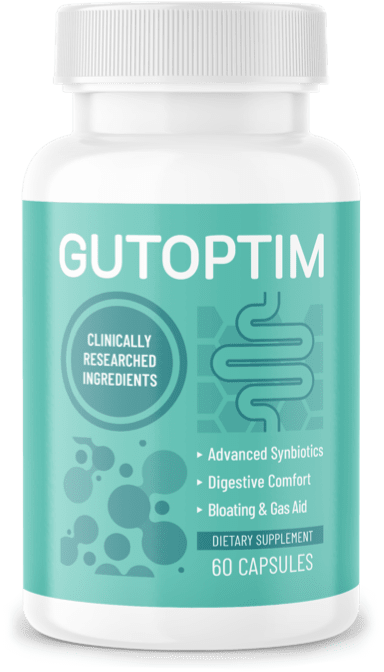
GutOptim
Fiber, clay, aloe and one probiotic in a 1.5 g blend
Serving2 capsules a day
Cost per day$1.63–$2.30
Every dose shownNo
Full ingredient list, but the whole blend is a fraction of the fiber doses used in studies.
Check price on the official site
Read the label check
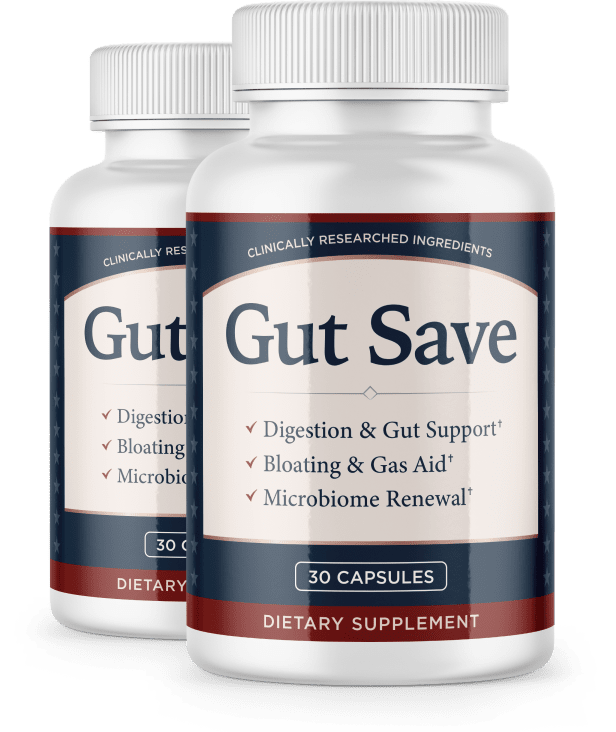
Gut Save
Fish collagen, herbs and probiotics, 500 mg with every dose listed
Serving1 capsule a day
Cost per day$1.63–$2.63
Every dose shownYes
The most open label of the three, with small amounts of each ingredient.
Check price on the official site
Read the label check
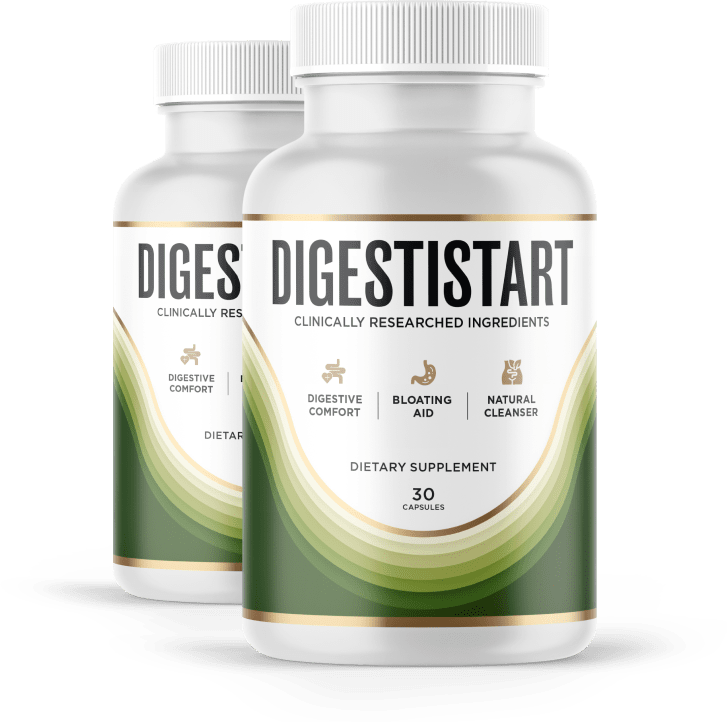
DigestiStart
11 traditional Chinese herbs in a 500 mg blend
Serving1 capsule a day
Cost per day$1.63–$2.63
Every dose shownNo
A herbal tonic blend, about 45 mg per herb, with mostly lab and animal studies behind it.
Check price on the official site
Read the label check
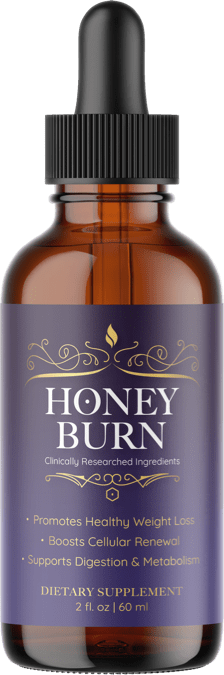
HoneyBurn
Honey, bee products, herbs and berberine in a 550 mg blend
Serving2 ml liquid a day
Cost per day$1.63–$2.30
Every dose shownNo
Berberine is listed last, so a serving holds about 4 mg of it at most.
Check price on the official site
Read the label check
Sources
- National Institute of Diabetes and Digestive and Kidney Diseases (NIDDK). Treatment for Lactose Intolerance. niddk.nih.gov
- LeWine H.E. Can taking enzyme supplements help soothe my bloating? Harvard Health Publishing, November 2022. health.harvard.edu
- Cleveland Clinic. Digestive Enzymes 101: Why They’re Important, September 2025. health.clevelandclinic.org
- Ganiats T.G. et al. Does Beano prevent gas? A double-blind crossover study of oral alpha-galactosidase to treat dietary oligosaccharide intolerance. Journal of Family Practice, 1994;39(5):441–445.
- Di Stefano M. et al. The effect of oral alpha-galactosidase on intestinal gas production and gas-related symptoms. Digestive Diseases and Sciences, 2007;52(1):78–83. doi:10.1007/s10620-006-9296-9
- Tuck C.J. et al. Increasing symptoms in irritable bowel symptoms with ingestion of galacto-oligosaccharides are mitigated by α-galactosidase treatment. American Journal of Gastroenterology, 2018. doi:10.1038/ajg.2017.245
- Hillilä M. et al. Does oral α-galactosidase relieve irritable bowel symptoms? Scandinavian Journal of Gastroenterology, 2016;51(1):16–21. PubMed 26133538
- Whitcomb D.C. et al. AGA Clinical Practice Update on the Epidemiology, Evaluation, and Management of Exocrine Pancreatic Insufficiency: Expert Review. Gastroenterology, 2023;165(5):1292–1301.
- Cleveland Clinic. Alpha-Galactosidase Capsules or Tablets. my.clevelandclinic.org
- US Food and Drug Administration. Exocrine Pancreatic Insufficiency Drug Products; Extension to Obtain Marketing Approval. Federal Register, October 26, 2007 (72 FR 60862). govinfo.gov
- LACTAID Fast Act caplets: Supplement Facts and directions, as listed by US retailers. wegmans.com